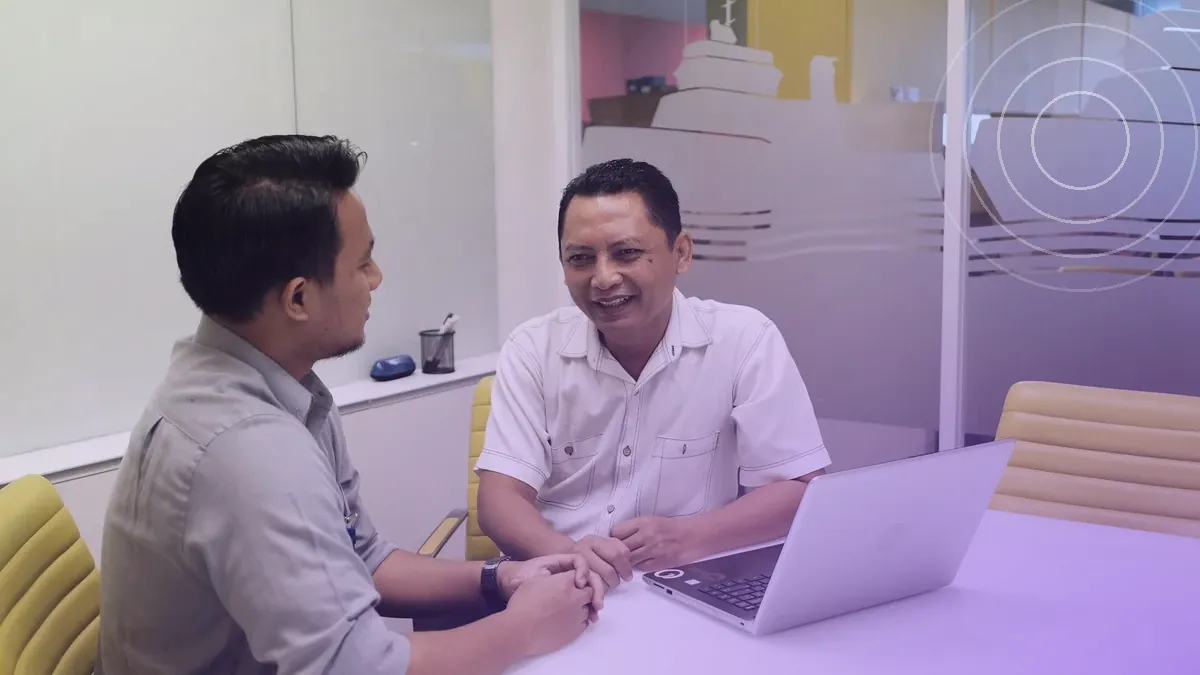
Hiring manager interviews, technical tests and case studies: how they differ and how to prepare
At many companies in Indonesia, the first interview is usually run by HR or the recruitment team. The next stage is often called the “user interview”, meaning an interview with your future direct manager or head of department. At this stage or afterwards you may be asked to complete a technical test or a case study.
 Resmi.ID Team · 4 min read ·
 Photo: blue sky / Unsplash
These three stages assess different things. Understanding the difference helps you prepare the right material instead of simply repeating your HR interview answers.
HR interviews and user interviews
HR interviews generally check basic fit: motivation, an overview of your experience, expectations and alignment with company culture. User interviews go deeper into the day-to-day work. Your future manager wants to know whether you can get started quickly, how you think, and whether they would be comfortable working with you.
- User questions tend to be specific: “How do you prepare the monthly reconciliation report?” or “What tools do you use to manage delivery schedules?”
- Managers often dig into the details of your stories: figures, tools, obstacles and the decisions you made.
- They may give you a scenario: “If in your first week you found the stock data didn't match, what would you do?”
Preparing for the user interview
- 1Dissect the job advertMark each duty and skill, then prepare one real example for each.
- 2Learn about the unitFind out what products, services or processes the department handles from official sites and news.
- 3Prepare technical detailsRecall the tools, systems, figures and procedures you have used.
- 4Practise explaining simplyCheck that you can explain technical work to a non-specialist.
- 5Prepare work questionsAsk about team targets, main challenges and day-to-day ways of working.
Be honest about what you have not yet mastered. An answer like “I haven't used that system, but I'm used to a similar one and usually need about two weeks to get fluent” is far better than pretending.
Technical tests come in many forms
Technical tests depend on the field. Examples include Excel tests for admin and finance roles, typing or correspondence tests for secretaries, coding tests for programmers, design tests for designers, hands-on practicals for technicians, cooks or equipment operators, and writing tests for content staff.
- Politely ask about the test format if it is unclear: duration, tools, and whether references are allowed.
- Practise core skills against the clock, for example VLOOKUP, pivot tables or basic coding exercises.
- When working, get a correct, tidy result first, then add more complex extras.
- If asked to explain your work, describe the reasons for your choices, including any assumptions you made.
Case studies assess how you think
Case studies are often used for analyst, marketing, operations, consulting and management trainee roles. You are given a business problem, for example “Sales at the Surabaya branch fell 20% in three months; what would you do?”, then asked to analyse it and recommend action, sometimes as a presentation.
Interviewers usually aren't looking for one right answer. They are judging whether you can structure the problem, ask the right questions, use data and reach a sensible recommendation.
- 1Restate the problemMake sure you understand the goal and constraints before analysing.
- 2Ask clarifying questionsFor example, whether the decline affects all products or only some.
- 3Build a frameworkBreak the problem into parts such as price, customer numbers and sales channels.
- 4Use the data providedCalculate neatly and state your assumptions where data is missing.
- 5Give a clear recommendationChoose two or three priority steps and explain why.
- 6Mention the risksShow that you have considered impact and how to measure success.
Example: answering a manager's scenario
Question: “If in your first week you found the stock data in the system didn't match the goods on the shelves, what would you do?” A good answer shows a sequence of thought: “First, I'd recount physically to make sure it isn't a counting error. Then I'd trace the latest transactions for that item, such as receipts or returns not yet entered. I'd report my findings to my manager with supporting data before changing anything in the system, because I wouldn't yet know the correction procedure here.”
An answer like this shows accuracy, initiative and awareness of the limits of authority as a new employee, three things future managers usually look for.
If you're asked to present
Use a simple structure: problem, findings, recommendation and next steps. Five to seven slides are usually enough. Rehearse to the time allowed and leave room for questions. The panel's questions are part of the assessment, so answer calmly and acknowledge any limits of your analysis.
After this stage
The user interview is often the deciding stage before an offer. Track your application status on the KarirResmi timeline, and when an invitation to the next stage arrives, confirm attendance or request another time through the available feature so the recruiter knows you are still interested.