Psychometric and aptitude tests: how to prepare without hunting for an “answer key”
In Indonesia, psychological tests (psikotes) are still a common selection stage, especially at large companies, state-owned enterprises (BUMN), banks and management trainee programmes. It is natural for candidates to feel anxious and search the internet for an “answer key”. The problem is that this often backfires.
 Resmi.ID Team · 4 min read ·
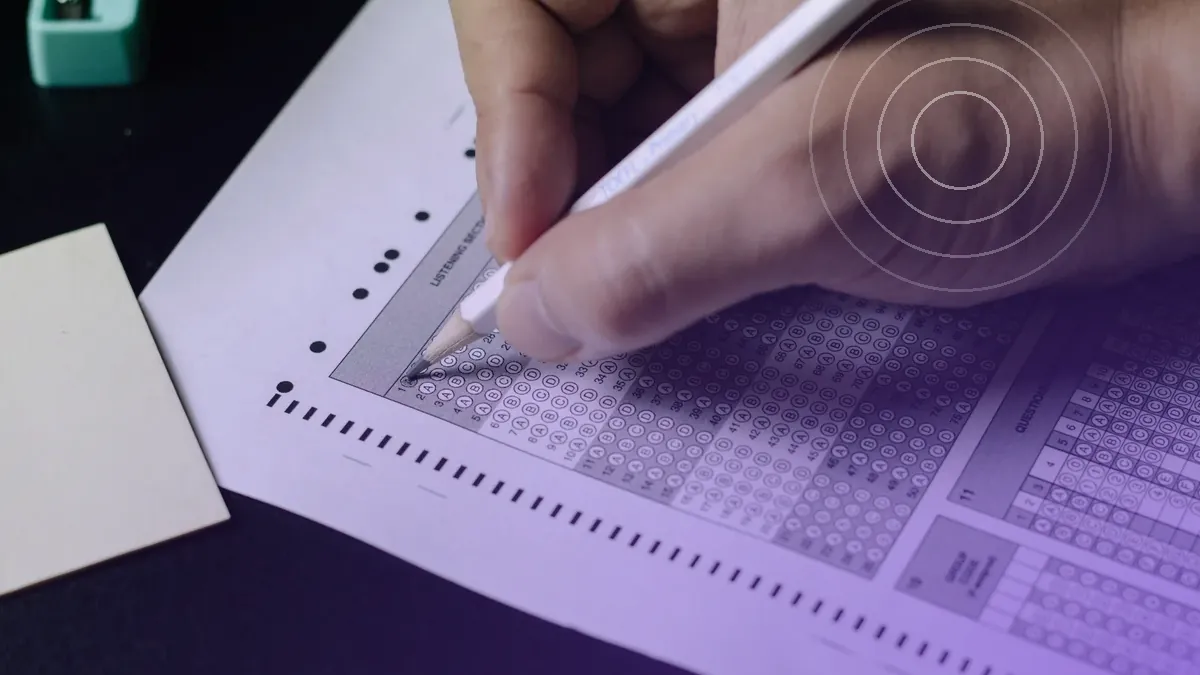 Photo: Nguyen Dang Hoang Nhu / Unsplash
Ability tests are designed to measure how quickly and accurately you think, not what you have memorised. Personality tests usually have ways of detecting inconsistent answers. What you can do is get used to the formats, so the results reflect your true ability.
Common types of test
- Academic aptitude or general ability tests: verbal items (synonyms, antonyms, analogies), numerical items (number series, arithmetic, ratios) and logical reasoning.
- Logic and figural tests: completing picture patterns, spotting the odd shape out, or rotating shapes.
- The Pauli or Kraepelin test: adding rows of digits as quickly and accurately as possible within a set time, to observe stamina, consistency and accuracy.
- Drawing tests: for example drawing a person or a tree, or continuing a pattern, interpreted by a psychologist.
- Personality and work-style tests: questionnaires where you choose statements, for example models similar to DISC, MBTI or other personality inventories.
Why an “answer key” does not help
Ability test items are usually drawn from large, varied question banks, so memorising the answers to one version is rarely useful. In personality tests there are no right or wrong answers. If you pretend to be an “ideal” person, your answers may look inconsistent, and the results may be judged less reliable.
A fabricated profile can also land you in a role that does not suit you. You are the one who will be doing that job every day.
Honest, effective practice
- 1Learn the formatsTry sample aptitude and logic items so the question types do not surprise you.
- 2Practise against the clockUse a timer so you get used to working under time pressure.
- 3Strengthen basic mathsPractise addition, fractions, percentages and ratios without a calculator.
- 4Build reading speedRead news or articles and summarise them to prepare for verbal items.
- 5Practise the Pauli rhythmAdd rows of digits for a few minutes to get a feel for the pace.
- 6Review your mistakesUnderstand why an answer was wrong rather than memorising it.
Learn to reason, not to memorise
Take a number series item: 3, 6, 12, 24, … Rather than guessing, get used to asking yourself: is the difference constant, is each number multiplied by the same amount, or are there two alternating patterns? Here each number is doubled, so the answer is 48. This way of questioning works for items you have never seen before.
For verbal analogies such as “doctor : hospital = teacher : …”, first identify the relationship in the first pair (place of work), then apply it to the second (school). Practising how to spot patterns is far more useful than memorising hundreds of answer pairs.
Strategy on the day
- Listen to and read the instructions in full. Many errors come from misunderstanding the task, not from difficult questions.
- Don't get stuck on one item. Skip it and come back if time allows, unless the instructions forbid it.
- In the Pauli/Kraepelin test, keep a steady pace from start to finish. Consistency usually matters as much as speed.
- In drawing tests, draw naturally and completely. It doesn't need to be artistic, but don't be careless.
- In personality tests, answer honestly based on how you behave at work, not the person you think the company wants.
- If two options both seem to fit, choose the one you do most often day to day, and don't overthink it.
Physical preparation the day before
A psikotes can last two to four hours or more. Get enough sleep, eat breakfast and arrive early. Bring the stationery requested, such as a 2B pencil, eraser and sharpener, because some tests are still on paper. For online tests, make sure your battery is full, your connection is stable and the room is quiet.
If an online test is proctored with your camera on, follow the rules. Don't open other tabs or ask anyone for help, because a breach can get your results cancelled.
About DISC- or MBTI-style personality tests
Many companies use work-style questionnaires to understand how you communicate, make decisions and work in a team. The results are usually used as input for discussion and placement, not as the only deciding factor. No personality type is automatically “better”.
If the company shares a summary of your results, use it for reflection. You may also politely ask how test results are used in the selection process.
If you don't pass
Failing a psikotes does not mean you are not intelligent or talented. The profile sought for that role may simply be different, or you may not have been at your best on the day. Note the question types that felt hardest, practise those, and keep applying. You can track the status of each application on the KarirResmi timeline so you know which stage is in progress.